Friday, November 4, 2022

Check out Yves Fey’s fabulous novel — Floats the Dark Shadow #HistoricalFiction #BlogTour #CoffeePotBookClub @YvesFey @cathiedunn


Floats the Dark Shadow

The Paris Trilogy

by Yves Fey


October 31st – November 4th, 2022

Publication Date: Second Edition, September 2022
Series: The Paris Trilogy
Publisher: Tygerbright Press
Pages: 340
Genre: Historical Mystery


Young American painter Theodora Faraday struggles to become an artist in Belle Époque Paris. She’s tasted the champagne of success, illustrating poems for the Revenants, a group of poets led by her adored cousin, Averill. 

When children she knows vanish mysteriously, Theo confronts Inspecteur Michel Devaux who suspects the Revenants are involved. Theo refuses to believe the killer could be a friend—could be the man she loves. 

Classic detection and occult revelation lead Michel and Theo through the dark underbelly of Paris, from catacombs to asylums, to the obscene ritual of a Black Mass. 

Following the maze of clues they discover the murderer believes he is the reincarnation of the most evil serial killer in the history of France—Gilles de Rais. Once Joan of Arc’s lieutenant, after her death he plunged into an orgy of evil. The Church burned him at the stake for heresy, sorcery, and the depraved murder of hundreds of peasant children. 

Whether deranged mind or demonic passion incite him, the killer must be found before he strikes again.


Barnes & Noble • Kobo • Apple Books • Audible  


Café Conversation – Chat about Oscar Wilde

Today, Paul had summoned them to the Café des Capucines to talk about the next issue of Le Revenant. But their chief critic had yet to arrive. Besides Averill and herself, there were Casimir, Jules, and the Revenant they’d dubbed the student Hyphen. The others were all sipping their first absinthe. Averill was already on his second. Theo indulged in a blanc-cassis, the crème de cassis tinting the bubbling champagne a fuchsia that was a satisfying clash with the milky chartreuse of the absinthe.

“C’est l’heure verte,” Averill lifted his glass in a toast.

The green hour. Creating absinthe was an act of alchemy, a ritual performed each afternoon. The interior of the café was perfumed with its scent, licorice sweet with a sharp herbal undercurrent. At first, Theo had loved the bittersweet perfume and found the elixir a quintessential part of the magic of Paris. It had become a darker sorcery since Averill could not or would not stop his indulgence. Did he now love absinthe even more than he loved his art?
 
“To Oscar Wilde,” Casimir added his own toast. He had told Theo that the extravagant café was Wilde’s favorite. The decadent oasis of plush garnet velvet and glowing stained glass ceilings was just across the street from where he had lived while writing Salomé.

“Salomé,” Theo murmured, conjuring the memory. Not long after they attended Verlaine’s funeral, Casimir had invited them to see the play, which Wilde had written in French. An actress he was courting had a small part in the avant-garde production. It was Theo’s second outing into Averill’s Paris and her discovery of its living, beating, poetic heart. She had been dazzled as the penniless theatre company performed its own alchemy with only the magic of words and shifting light. A full moon hung above the stage, its pure pale color corrupted as the play unfolded its tale of obsession, seduction, and death. Pearl slowly clouded and turned to tarnished silver. Silver was slowly stained scarlet. By the end of the play, crimson light drenched the set and actors like flowing blood. Theo had been transfixed by the beauty and exquisite terror of the night.

“Wilde is still in prison, isn’t he?” The student peered from beneath the fringe of brown hair that all but covered his eyes.

“He’ll be released at the end of this month,” Casimir answered. “When he comes to France, I have vowed to visit him.”

“You believe he will return here?” Jules asked.

“Where else would he go?” Casimir asked in turn. “In London he’d be snubbed, in America he’d be shot. Wouldn’t he, Theo?”

“Snubbed and shot,” Theo admitted, though she might have secretly pointed him to the right bar. That last rough-and-tumble year working at The Louvre bar in Mill Valley, she had learned many things that nice society girls weren’t supposed to know. What mysteries remained, Averill had been willing to illuminate. From the beginning, he’d treated her as an equal. There were no forbidden topics. He’d told her it was common for schoolboys to experiment with each other. Most came to prefer women, some never did, and some desired both. He’d been amused to hear that some of the girls at finishing school were far more intrigued by each other than the muscular riding instructor she’d thought so alluring.

“What is Wilde like?” the student Hyphen asked.

“Oscar revels in his fame,” Casimir said. “He has to be the center of attention. He loves to delight and he loves to shock—if not to the extreme his trial brought about.” 

“The judge called it the crime of the century,” Averill sneered. “You have to wonder what he thought of Jack the Ripper.”

Averill had said little, Theo realized. Neither for pleasure nor from compulsion.

“The judge probably thought the Ripper performed a public service,” Casimir replied. “Wilde’s trial was a circus. He thought he could whip them with his wit, but they sledgehammered him with their morals. Two years at hard labor.”

“Two years does not seem so terrible,” Theo said.

“It was supposed to be a death sentence,” Averill replied, animated now. “Most prisoners die of exhaustion. Their health gives out. Or their sanity. He must be amazingly strong to have survived.”

“What happened to Wilde’s lover?” Theo asked, earning a shocked glance from Jules.

“Nothing happened to Lord Queensbury’s son.” Casimir’s voice dripped disdain. “Such creatures usually escape. Bosie is a rancid piglet. Vanity without talent. Utterly self-centered.”

“Did you ever see Salomé?” Theo asked the student, trying to draw him out again.

“No, I joined the Revenants after it had closed.”

“The words dripped color and glittered like jewels. It was like watching a painting by Gustav Moreau come to life.” Theo hoped the mention of Averill’s favorite painter might stir a response from him. He only swirled his absinthe, watching the color glow in the afternoon light.

“Truly magnificent—but it was almost a catastrophe,” Casimir added. “The only theatre they could afford was condemned, all but falling apart around them. There was a fire backstage the night of the first performance. The actors were beating out the blaze on costumes.”

Theo shut her eyes against the image of flaming clothes. No one had died during Salomé, except on stage.

“Topping that, they broke the wax head of John the Baptist they had borrowed from the Museé Grévin,” Averill added.

“So much for any profits—despite being sold out.” Casimir opened his fingers as if coins were falling through them.

The student Hyphen sighed regretfully. “I wish I had been there.”


Yves Fey


Yves Fey has MFA in Creative Writing from the University of Oregon, and a BA in Pictorial Arts from UCLA. 

Yves began drawing as soon as she could hold a crayon and writing at twelve. She’s been a tie dye artist, go-go dancer, creator of ceramic beasties, writing teacher, illustrator, and has won prizes for her chocolate desserts. Her current obsession is creating perfumes inspired by her Parisian characters. 

She lives in Albany with her mystery writer husband and their cats, Charlotte and Emily, the Flying Bronte Sisters.

Connect with Yves Fey:

Website • Twitter • Facebook • Instagram


Tuesday, November 1, 2022

Blog Tour: The Founding by Michael L. Ross


Join The Coffee Pot Book Club on tour with…


The Founding

Across the Great Divide, Book #3

by Michael L. Ross


November 28th – December 9th, 2022

Publication Date: December, 2022
Publisher: HistoricalNovelsRUS
Pages: 455 (PDF)
Genre: Historical Fiction


Two men, two dreams, two new towns on the plains, and a railroad that will determine whether the towns—one black, one white—live or die. 

Will Crump has survived the Civil War, Red Cloud’s War, and the loss of his love, but the search for peace and belonging still eludes him. From Colorado, famed Texas Ranger Charlie Goodnight lures Will to Texas, where he finds new love, but can a Civil War sharpshooter and a Quaker find a compromise to let their love survive? When Will has a chance to join in the founding of a new town, he risks everything—his savings, his family, and his life—but it will all be for nothing if the new railroad passes them by.

Luther has escaped slavery in Kentucky through Albinia, Will’s sister, only to find prejudice rearing its ugly head in Indiana. When the Black Codes are passed, he’s forced to leave and begin a new odyssey. Where can he and his family go to be truly free? Can they start a town owned by blacks, run by blacks, with no one to answer to? But their success will be dependent on the almighty railroad and overcoming bigotry to prove their town deserves the chance to thrive.

Will’s eldest sister, Julia, and her husband, Hiram, are watching the demise of their steamboat business and jump into railroads, but there’s a long black shadow in the form of Jay Gould, the robber baron who ruthlessly swallows any business he considers competition. Can Julia fight the rules against women in business, dodge Gould, and hold her marriage together?

The Founding tells the little-known story of the Exodusters and Nicodemus, the black town on the plains of Kansas, and the parallel story of Will’s founding of Lubbock, Texas, against the background of railroad expansion in America. A family reunited, new love discovered, the quest for freedom, the rise of two towns. In the end, can they reach Across the Great Divide? The Founding is the exciting conclusion to the series.


Praise for The Founding:

“Michael is an excellent storyteller and has done a wonderful job depicting Luther, and the other black characters in this book.  He has done his homework and depicts many historical facts about Nicodemus in a most enlightening and creative way.  It has been a pleasure working with someone who has made a concerted effort to get things right.  
 
~ Angela Bates
Nicodemus Descendant/Historian
Executive Director
The Nicodemus Historical Society and Museum


Trailer


Buy Links


Michael L. Ross


Michael Ross is a lover of history and great stories.

He’s a retired software engineer turned author, with three children, and five grandchildren, living in Newton, Kansas with his wife of 39 years. Michael graduated from Rice University and Portland State University with degrees in German and software engineering. He was part of an MBA program at Boston University. 

Michael was born in Lubbock, Texas, and still loves Texas. He’s written short stories and technical articles in the past, as well as articles for the Texas Historical Society. 

Across the Great Divide now has three novels in the series, "The Clouds of War", and "The Search", and the conclusion, "The Founding".  "The Clouds of War" was an honorable mention for Coffee Pot Book of the Year in 2019, and an Amazon #1 best seller in three categories, along with making the Amazon top 100 paid, reviewed in Publisher's Weekly. "The Search" won Coffee Pot Cover of the Year in 2020, and Coffee Pot Silver Medal for Book of the Year in 2020, as well as short listed for the Chanticleer International Book Laramie Award. 


Social Media Links:


Tour Schedule

Blog Tour: The Yanks are Starving by Glen Craney


Join The Coffee Pot Book Club on tour with…


The Yanks are Starving

A Novel of the Bonus Army

by Glen Craney


January 3rd – March 7th, 2023

Publication Date: January, 2014
Publisher: Brigid's Fire Press
Pages: 561
Genre: Historical Fiction


Two armies. One flag. No honor.

The most shocking day in American history.

Former political journalist Glen Craney brings to life the little-known story of the Bonus March of 1932, which culminates in a bloody clash between homeless World War I veterans and U.S. Army regulars on the streets of Washington, D.C.

Mired in the Great Depression and on the brink of revolution, the nation holds its collective breath as a rail-riding hobo named Walter Waters leads 40,000 destitute men and their families to the steps of the U.S. Capitol on a desperate quest for economic justice.

This timely epic evokes the historical novels of Jeff Sharra as it sweeps across three decades following eight Americans who survive the fighting in France and come together fourteen years later to determine the fate of a country threatened by communism and fascism.

From the Boxer Rebellion in China to the Plain of West Point, from the persecution of conscientious objectors to the horrors of the Marne, from the Hoovervilles of the heartland to the pitiful Anacostia encampment, here is an unforgettable portrayal of the political intrigue and government betrayal that ignited the only violent conflict between two American armies.


Awards:

Foreword Magazine Book-of-the-Year Finalist
Chaucer Award Book-of-the-Year Finalist
indieBRAG Medallion Honoree


Praise for The Yanks are Starving:

"[A] wonderful source of historical fact wrapped in a compelling novel."
~ Historical Novel Society Reviews

"[A] vivid picture of not only men being deprived of their veterans' rights, but of their human rights as well.…Craney performs a valuable service by chronicling it in this admirable book."
~ Military Writers Society of America


Buy Links


Glen Craney


GLEN CRANEY is an author, screenwriter, journalist, and lawyer. 

A graduate of Indiana University Law School and Columbia University Graduate School of Journalism, he is the recipient of the Nicholl Fellowship Prize from the Academy of Motion Pictures and the Chaucer and Laramie First-Place Awards for historical fiction. 

He is also a four-time indieBRAG Medallion winner, a Military Writers Society of America Gold Medalist, a four-time Foreword Magazine Book-of-the-Year Award Finalist, and an Historical Novel Society Reviews Editor's Choice honoree. 

He lives in Malibu and has served as the president of the Southern California Chapter of the HNS.


Social Media Links

Website • Twitter • Facebook • BookBub


Tour Schedule


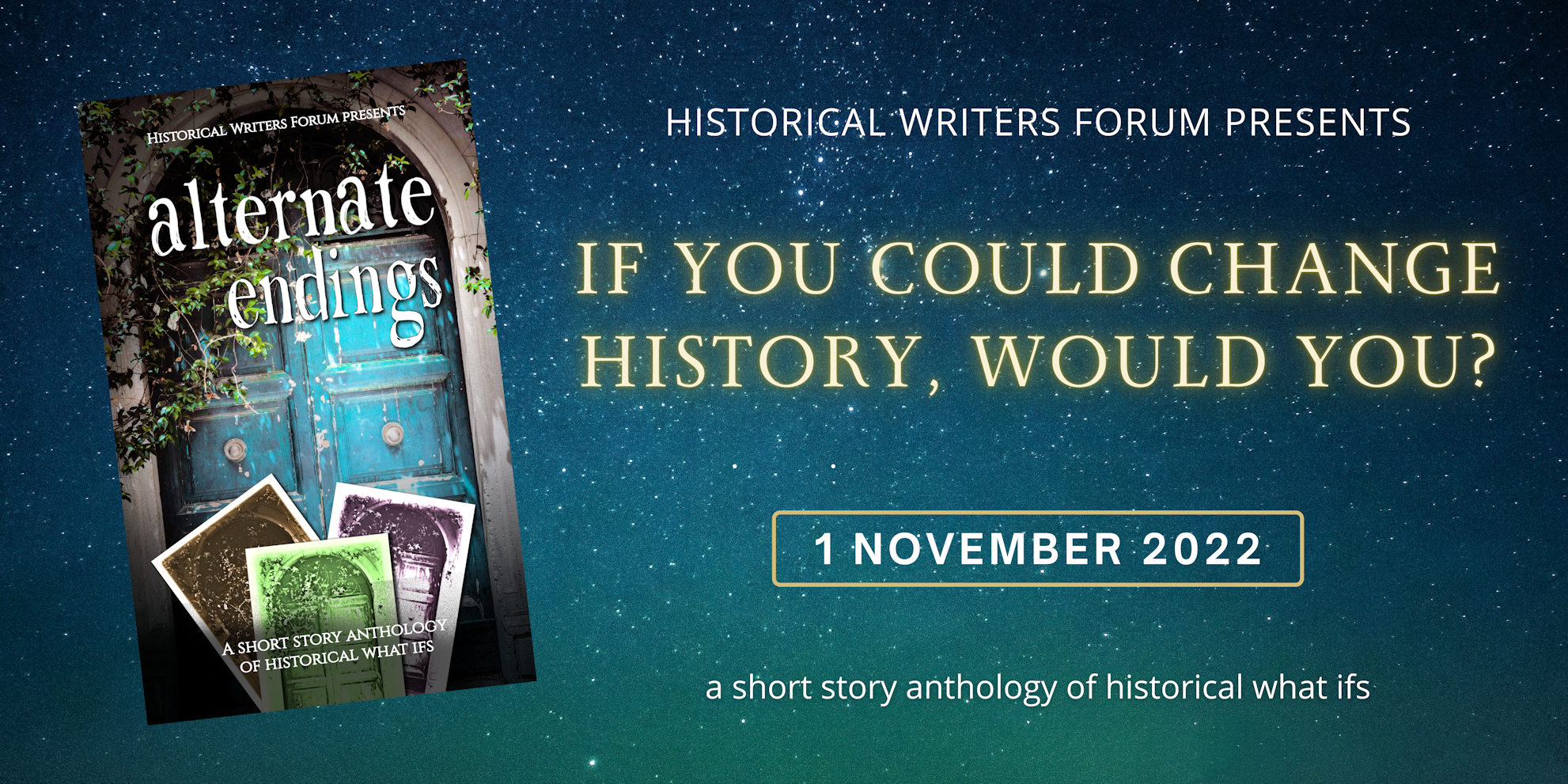
Check out this fabulous anthology — Alternate Endings #AlternativeHistoricalFiction #BookSpotlight #CoffeePotBookClub @HistWriters @cathiedunn


Alternate Endings

A Historical Writers Forum Anthology


*Release Day Book Spotlight*

Publication Date: November 1st, 2022
Publisher: Historical Writers Forum
Pages: 360
Genre: Alternative Historical Fiction


We all know the past is the past, but what if you could change history?

We asked eight historical authors to set aside the facts and rewrite the history they love. The results couldn’t be more tantalizing.

What if Julius Caesar never conquered Gaul?

What if Arthur Tudor lived and his little brother never became King Henry VIII?

What if Abigail Adams persuaded the Continental Congress in 1776 to give women the right to vote and to own property?

Dive in to our collection of eight short stories as we explore the alternate endings of events set in ancient Rome, Britain, the United States, and France.

An anthology of the Historical Writers Forum.


Participating Authors and their Stories:

Virginia Crow - Vercingetorix’s Virgin
Cathie Dunn - A Race Against Time
Sharon Bennett Connolly - Long Live the King
Karen Heenan - Princess of Spain
Samantha Wilcoxson - Tudors With a Twist
Michael Ross - Remember the Ladies
Salina Baker - Act Worthy of Yourselves
Elizabeth Corbett - Marie-Thérèse Remembers

Foreword by Stephanie Churchill


Connect with the Historical Writers Forum:


Monday, October 31, 2022

Check out Carolyn Hughes' fabulous novel — Squire's Hazard #HistoricalFiction #BlogTour #CoffeePotBookClub @writingcalliope @cathiedunn


Squire’s Hazard

The Meonbridge Chronicles

by Carolyn Hughes


Publication Date: October 10th, 2022
Series: The Meonbridge Chronicles
Publisher: Riverdown Books
Pages: 360
Genre: Historical Fiction


How do you overcome the loathing, lust and bitterness threatening you and your family’s honour?

It’s 1363, and in Steyning Castle, Sussex, Dickon de Bohun is enjoying life as a squire in the household of Earl Raoul de Fougère. Or he would be, if it weren’t for Edwin de Courtenay, who’s making his life a misery with his bullying, threatening to expose the truth about Dickon’s birth.

At home in Meonbridge for Christmas, Dickon notices how grown-up his childhood playmate, Libby Fletcher, has become since he last saw her and feels the stirrings of desire. Libby, seeing how different he is too, falls instantly in love. But as a servant to Dickon’s grandmother, Lady Margaret de Bohun, she could never be his wife.

Margery Tyler, Libby’s aunt, meeting her niece by chance, learns of her passion for young Dickon. Their conversation rekindles Margery’s long-held rancour against the de Bohuns, whom she blames for all the ills that befell her family, including her own servitude. For years she’s hidden her hunger for retribution, but she can no longer keep her hostility in check.

As the future Lord of Meonbridge, Dickon knows he must rise above de Courtenay’s loathing and intimidation, and get the better of him. And, surely, he must master his lust for Libby, so his own mother’s shocking history is not repeated? Of Margery’s bitterness, however, he has yet to learn…

Beset by the hazards these powerful and dangerous emotions bring, can young Dickon summon up the courage and resolve to overcome them?

Secrets, hatred and betrayal, but also love and courage – Squire’s Hazard, the fifth MEONBRIDGE CHRONICLE.


This title is available on #KindleUnlimited.


How do you plot a series without losing your threads?

This is an interesting topic and it has made me look at the structure of my series in a way I don’t think I’ve really done before. When I wrote Fortune’s Wheel, I didn’t know it would be a series. So, I didn’t “plot” the series from the beginning. But, having finished Fortune’s Wheel, I realised I wanted to write more about the folk of Meonbridge, so I wrote A Woman’s Lot. Even then I wasn’t thinking of it as a series, but by the time I wrote book 3, De Bohun’s Destiny, I knew there would be more. It’s comparatively recently that I’ve decided there will be SEVEN Meonbridge Chronicles, plus one or two spin-offs. (I’ve also already written three novellas, which are prequels to Book 1, and I am currently writing a “companion novel” that follows on from Book 4. There might be others….) So, my “planning” of the series has been somewhat back-to-front, with no clear strategy in mind. Having said that, I did, right from the start, write detailed descriptions of my main characters, and I maintain a chart with all their ages, which has proved invaluable in keeping track of them all. I have developed an entirely fictional map of Meonbridge, very roughly based on a real village in the Meon Valley, in Hampshire, to help me find my way around the place! I do also have outlines and summaries of each of the previous books. Luckily, I’ve never even thought of throwing them away once the book was published, so I have them all to refer to should I need to.

As for keeping the threads together within the story I’m actually writing. I update the character descriptions as necessary to reflect the development of the characters – aging, life events, change in ambition or outlook. I write an outline of the story, which mostly consists of major plot points (chapters), and may include scenes and sometimes even snippets of dialogue, if they happen to have popped into my head. I maintain a chart in which I record the chapters, a brief outline of their scenes, timeline, POV characters. I colour-code by character name so that I can easily see the balance of chapters, so that the threads weave together and characters carry an appropriate quantity of story given their role.

None of this is set in stone. Once I’ve done as much outlining/plotting as seems necessary, I embark on drafting, and the outline acts as a guide to the story’s development, but not a strict agenda. I rewrite the outline as I go. And I often do need to. Later books inevitably refer to events in earlier books, partly as a way of providing back story, either to remind readers of earlier events, or to help readers new to the series not be entirely lost. But mostly because, as in real life, earlier life events do sometimes have a way of coming back to haunt, or at least to influence, our present lives.

In Squire’s Hazard, it is the manner of the eponymous squire Dickon’s birth that comes back to haunt him. That was part of the story of Book 1, Fortune’s Wheel. What happened in Book 3, De Bohun’s Destiny, is a factor too in his present troubles. A secondary thread in Squire’s Hazard involves Margery, a woman for whom the events of the past are a source of terrible rancour that will eventually add to Dickon’s present problems. As I was writing Squire’s Hazard, I needed to refer often to those earlier books, to ensure I remembered what happened correctly (or, in fact, understood why Margery misremembered events, or put her own spin on things…) 

By now, having written the fifth book, I do know a lot about Meonbridge. I know the village, the community, the backstories of all the principal characters, some in more detail than others, depending on how important they are in carrying the story. The storylines are intended to further the lives of the characters and the community. For each new book, I start from determining which characters will tell the story, and then the storyline continues from earlier stories. This hasn’t been planned but emerges as a result of what has happened before. So, for example, in Book 2, A Woman’s Lot, Emma left Meonbridge, apparently to find a better life for herself and her children. In Book 4, Children’s Fate, we catch up with them again, and the storyline was developed partly to reveal whether her hopes were realised.

So, I do have various tools to help me recall the events of earlier books and keep the series coherent and on track. But in truth I do also simply reread those books, or relevant parts of them, to remind me what happened as I write about them again. 

In principle, the overall idea of the series is to watch how the people of Meonbridge recovered from the Black Death – that’s the main storyline in Book 1 – and then follow different characters’ lives over the ensuing years. Each book is set two or three years after the previous one. Each has its own set of POV characters but they do overlap between books, and some characters have more of a principal role – for example, Margaret and Alice appear in every book, whilst other characters appear more than once but not necessarily as main characters. The number of POV characters has increased with each book. Book 1 has three, book 2, four. Book 3 has 5, plus two “subsidiary” POV characters. Book 4 and 5 both have four main POV plus three “subsidiaries”. It’s a lot to keep track of!

Does the series have an overall structure and arc? Because I’ve not planned it from the beginning, it certainly didn’t. But more recently I think I have shaped an arc for it.

Any series must have ups and downs, where individual characters and/or the life of the whole community come under threat and do or don’t recover. The Meonbridge Chronicles series doesn’t really have a trajectory, apart from the chronological one. All the books have an arc of their own: the stories are essentially standalone, though they all have earlier threads woven through them, and each book does have a conclusion, a rounding off of that storyline. At the end of Squire’s Hazard, I hint at future events. And, although I didn’t know it when I started, I do now know that Dickon is a main thread throughout the series, for he is introduced as a baby in Book 1, is important to the storyline in Book 3, has a major role in Book 5, Squire’s Hazard, and will be essentially the “hero” by Book 7.  Knowing this has come to me relatively recently! I didn’t know how long the series would be or how it would end, but now I do know both. So my “plotting” may have been unconventional but I’m glad that I at last know where I’m going!  


Carolyn Hughes


Carolyn Hughes has lived much of her life in Hampshire. With a first degree in Classics and English, she started working life as a computer programmer, then a very new profession. But it was technical authoring that later proved her vocation, as she wrote and edited material, some fascinating, some dull, for an array of different clients, including banks, an international hotel group and medical instruments manufacturers.

Having written creatively for most of her adult life, it was not until her children flew the nest several years ago that writing historical fiction took centre stage, alongside gaining a Master’s degree in Creative Writing from Portsmouth University and a PhD from the University of Southampton.

Squire’s Hazard is the fifth MEONBRIDGE CHRONICLE, and more stories about the folk of Meonbridge will follow.

You can connect with Carolyn through her website www.carolynhughesauthor.com and social media.


Connect with Carolyn: